.png)
DeFi was built for transparency.
On public blockchains, balances, transfers, and positions are visible by default. That transparency pushed DeFi TVL to $172B in December 2021. But today, it is also becoming a ceiling. Even in the last bull cycle, TVL did not break its previous all-time high.
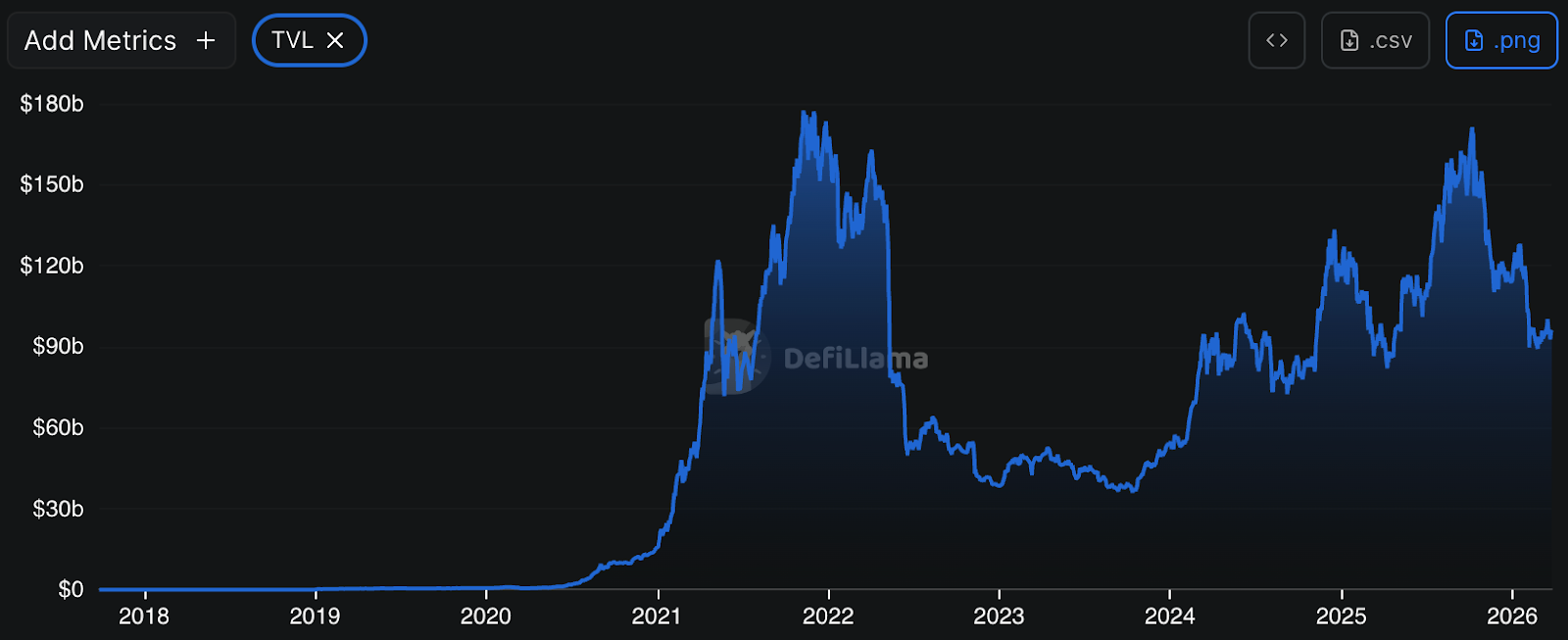
DeFiLlama - Total Value Locked Chart - March 2026
DeFi needs a new growth engine.
That engine is institutional DeFi, and the clearest entry point is RWAs. The next wave of growth will not come from recycling the same on-chain capital across the same protocols. It will come from bringing much larger pools of capital on-chain: funds, credit products, treasury assets, private market instruments, and institutional balance sheets.
That is where the opportunity sits.
There is an estimated $100T of assets that could move on-chain, yet only a tiny fraction has so far. This is not just a tokenization gap. It is a product gap between public blockchain infrastructure and institutional requirements.
Institutions are interested in blockchain rails, tokenization, and on-chain markets. But they cannot operate in an environment where sensitive financial data is exposed to everyone.
DeFi was built for transparency. Institutional finance was not.
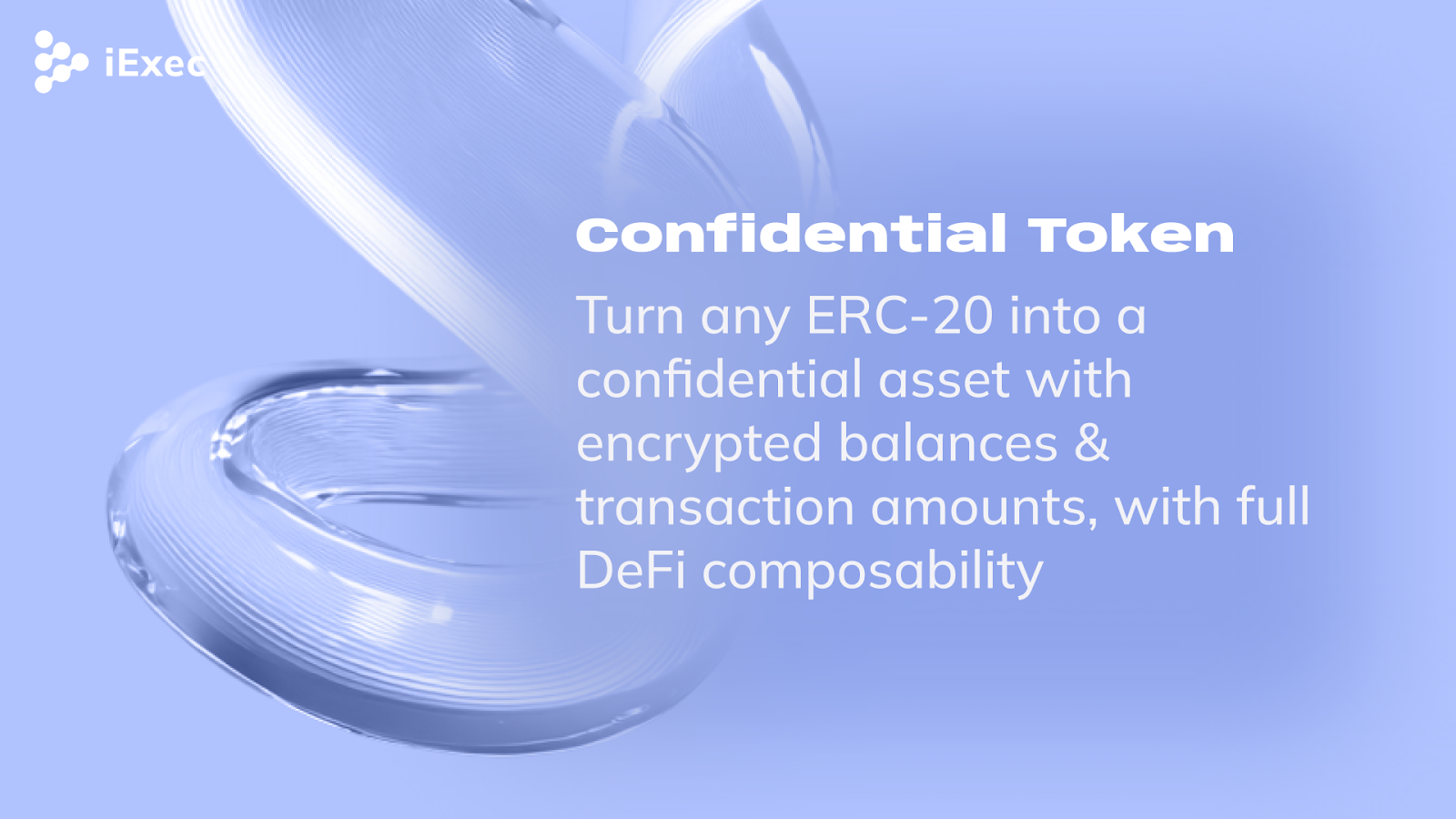
The Confidential Token is the missing privacy layer for institutional DeFi.
It turns any ERC-20 into a confidential, auditable asset, with encrypted balances and transfer amounts, while preserving the control institutions need to operate on a public blockchain. In simple terms, it removes one of the biggest blockers preventing institutional capital and RWAs from moving on-chain at scale.
Its model is simple: wrap, transact privately, disclose selectively, then unwrap back into the public token. An existing ERC-20 can be wrapped into its confidential equivalent, used with confidentiality enabled, and later unwrapped back into the original asset. That gives issuers, protocols, and DeFi allocators a practical path to confidential DeFi without redesigning the underlying token.
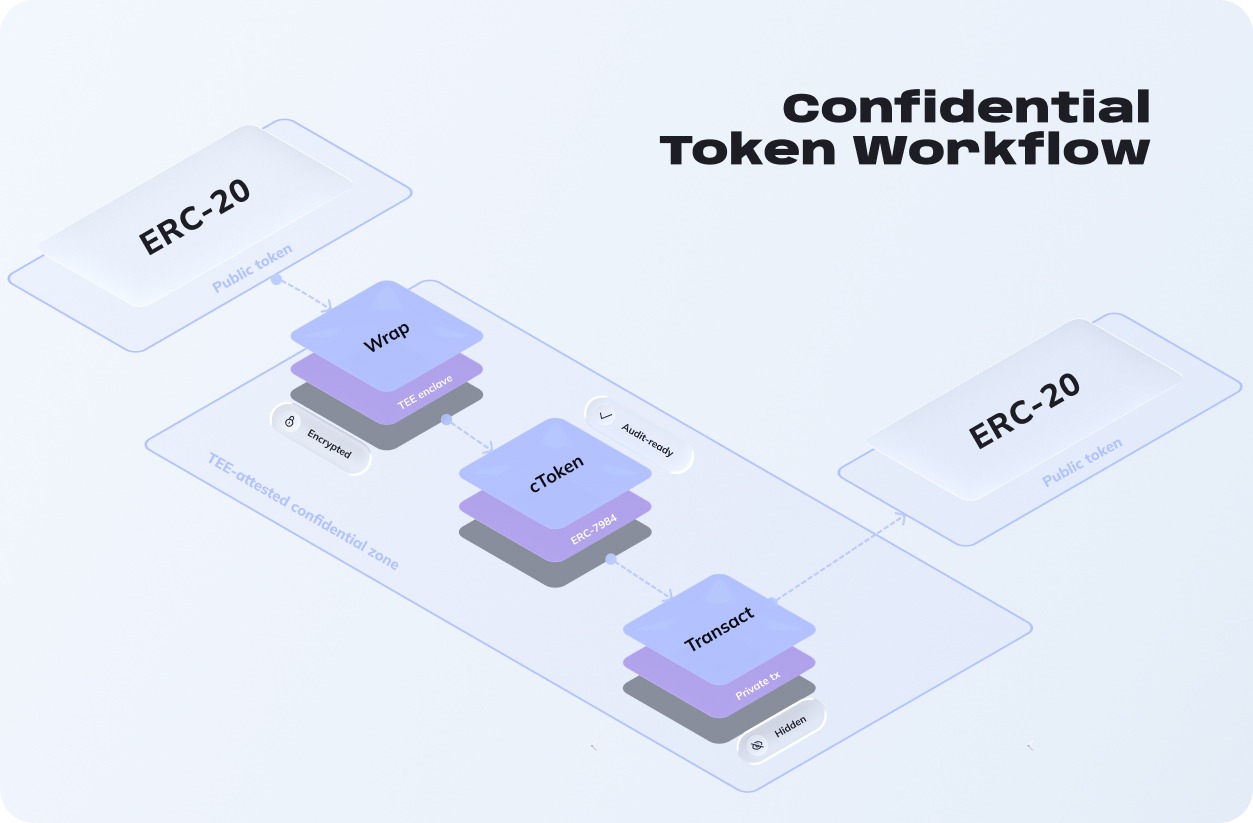
The product implements ERC-7984 and runs on Intel TDX.
ERC-7984 provides the framework for confidential token behavior, while Intel TDX provides the secure execution environment that protects sensitive computation at scale with TEE. Together, they make the Confidential Token secure by design and built for institutional use.
Privacy is not new for iExec.
Since 2017, we have been building programmable privacy infrastructure and deep expertise in Trusted Execution Environments. What is new is bringing that foundation on-chain for a specific category: confidential DeFi.
The Confidential Token is the first product to make that shift real.
And the real unlock is selective disclosure.
Institutions do not need opacity. They need control. Sensitive financial data should stay private from the market while remaining accessible to the right parties when needed. Regulators, auditors, administrators, and approved counterparties may need visibility. Competitors and the public market do not.
This is what makes the Confidential Token especially important for RWAs.
Tokenized funds, private credit products, treasury instruments, and other regulated assets cannot scale institutionally if investor balances, subscriptions, redemptions, or settlement flows are public by default. With selective disclosure, that information can stay confidential on-chain while remaining auditable on demand.
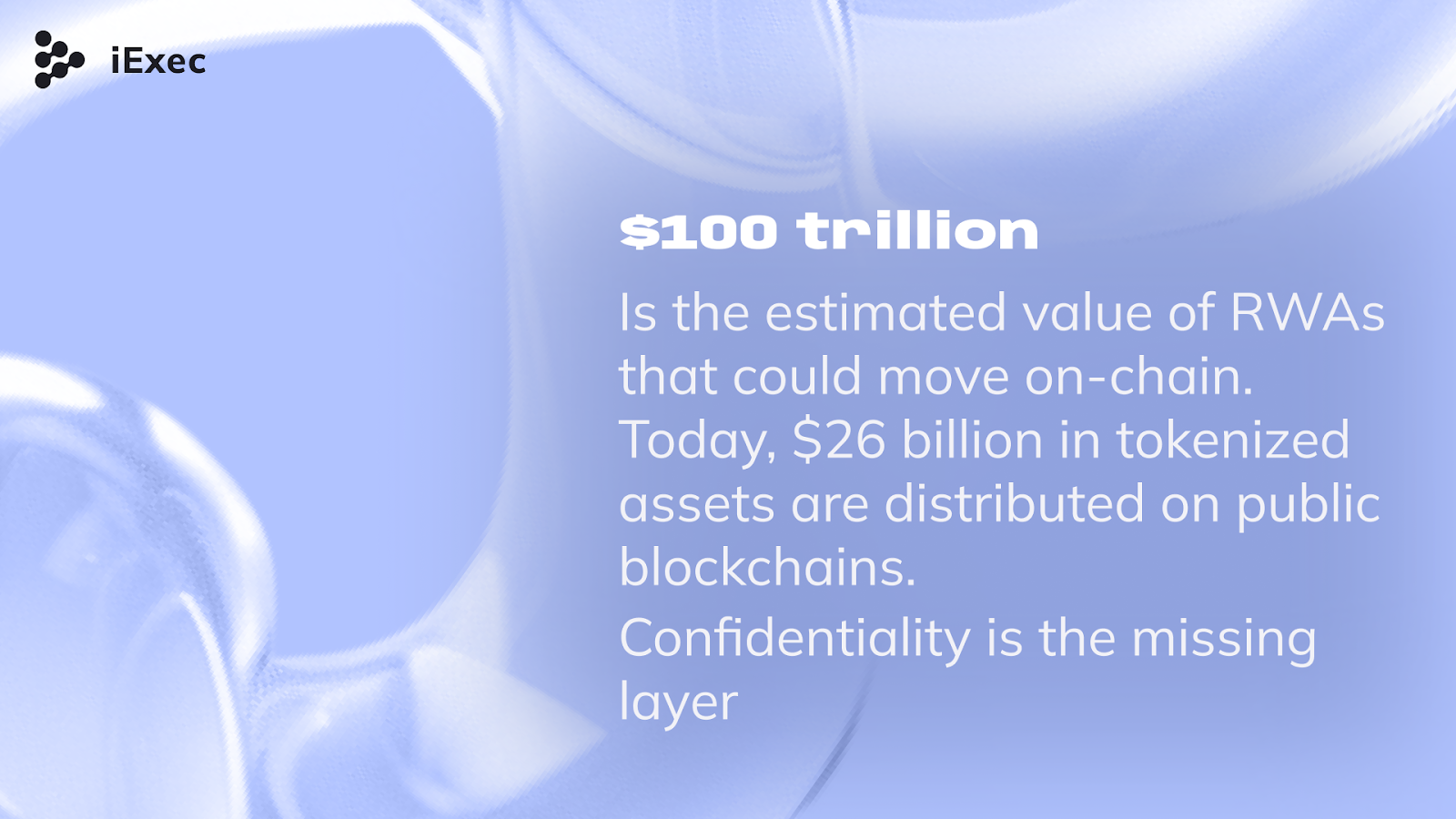
That is the missing link to the $100T opportunity.
The market is not missing demand for tokenization. It is missing infrastructure that matches institutional operating requirements. If sensitive financial data remains public by default, a large part of institutional capital will stay out. Remove that pain point, and the market opens up.
The same logic applies to DeFi capital allocators.
Professional investors, DAO treasuries, and institutional desks should not have to reveal every position, allocation, or collateral configuration in real time. When that information is public, strategies can be copied, front-run, or exploited. Confidentiality protects execution, reduces information leakage, and makes on-chain participation more viable for larger pools of capital. That is why the Confidential Token is more than a privacy feature. It is a growth enabler. For RWA issuers, it removes one of the key reasons institutional products remain constrained off-chain. For DeFi protocols and allocators, it opens the door to capital that cannot operate under full public transparency.
The Role of RLC in the Confidential DeFi Stack
As we introduce the Confidential Token, it’s important to highlight the role of RLC, the native utility token at the core of iExec’s infrastructure.
This demo focuses on showcasing the product and its capabilities, and RLC remains a central piece of the ecosystem. It represents the value of the off-chain computing infrastructure powering confidential execution.
RLC will operate at protocol level. It is directly integrated into the infrastructure and captures value from usage, transactions, and execution demand. As adoption grows, more confidential execution leads to more protocol activity, reinforcing the RLC value cycle.
At the same time, we’re working on a design that removes friction for end users and institutions. Confidential Token and the underlying infrastructure can be accessed without requiring users to manage a native token. This makes the product experience simple and institution-ready, while RLC continues to function as the coordination and value layer behind the scenes.
As usage increases, protocol revenue is partially converted into RLC on the market through an automated buyback mechanism. This creates a direct link between real adoption and token demand, without introducing friction at the user level.
A more detailed overview of RLC tokenomics and its business model will be shared ahead of the mainnet launch of the new confidential DeFi and RWA protocol later this year.
Confidential Token demonstrates the product layer, while RLC remains the asset capturing the value of confidential execution at scale.

The Confidential Token is the first product built with iExec’s newly released Confidential Smart Contracts.
Currently live as a demo on Arbitrum Sepolia, it showcases how confidential execution can be applied to real DeFi and RWA workflows.
These Confidential Smart Contracts enable financial logic to run alongside public blockchains privately, combining:
This architecture extends what DeFi can do, without breaking composability or requiring new ecosystems.
If institutional DeFi and RWAs are going to scale, they need more than transparency.
They need confidentiality, auditability, and control for their clients.
Confidential Token is the first step. Confidential Smart Contracts and off-chain computation are the foundation.
Want to take this a step further?
Try the Demo
Explore our documentation
Get in touch